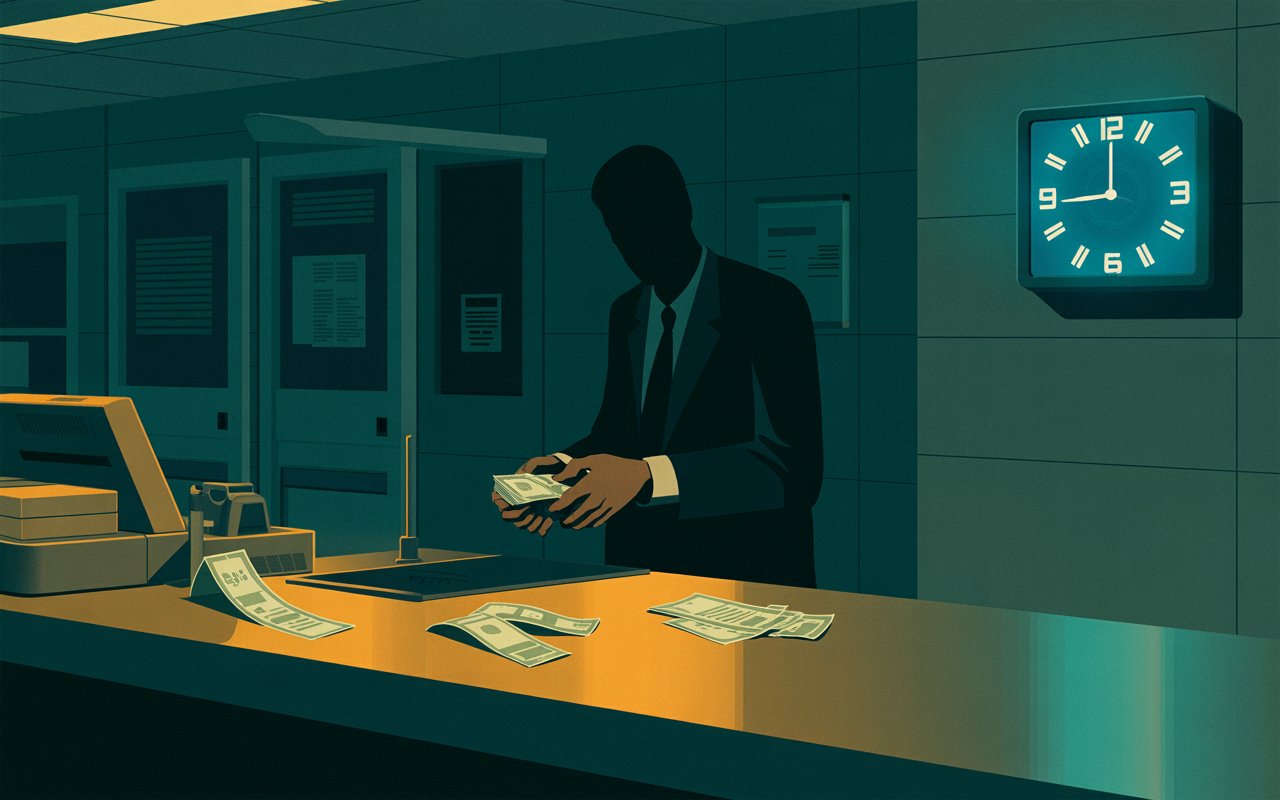
A health-care employee's scheme is revealed when she runs out of time to repay "borrowed" money.
April 10, 2026
7 min read
18 views
Bluebell Health Care is a $1 billion public health-care system with four hospitals and 25 clinics serving a community of more than 5 million people. Bluebell prides itself on providing the highest level of health care to its customers 24 hours a day, seven days a week.
Bluebell's customers make payments using cash, check, or credit card. The health-care system's standard operating procedures for collections require all revenue (cash and checks) to be deposited on the next business day, except for holidays and weekends. Revenue collected during those times is deposited the next business day. Each day, dozens of departments make deposits into Bluebell's bank account. Bluebell staff accountants reconcile daily revenue collections to the bank deposits. Because of holidays, weekends, and other discrepancies, the lag between revenue collections and deposits generally is one to three days. If an accountant observes a deposit has not been made timely, he or she is required to contact the offending department. Occasionally, a department will miss a daily deposit, usually the result of an employee who is on vacation.
The staff accountants find the revenue reconciliation process time-consuming and repetitive. Late deposits often go unquestioned, as the deposit usually appears a day or two later. Bluebell Hospital North, one of the hospitals within the system, is a repeat offender when it comes to late deposits.
Stephanie Abrams, an administrative assistant at the hospital, has been with Bluebell nearly 15 years. She collects all revenue, prepares a deposit ticket, and delivers the deposit to the bank. Although she is knowledgeable about the revenue collection standard operating procedures, deposits from Bluebell North sometimes run as much as seven days late.
Robert James, the staff accountant assigned to reconcile revenue collections and deposits for Bluebell North, has been with the health-care system more than 10 years. He and Abrams are members of a local church group. In fact, Abrams recommended James for his position with Bluebell.
Initially, when James would see a deposit was missing, he would call or email Abrams. Her response often was that one of the departments was busy and hadn't completed the deposit in time to get it to the bank before it closed for the evening. On occasion, when the deposit was missing for more than a few days, Abrams offered to inquire with the bank to determine if the deposit had been misplaced.
Over the years, James observed that the deposits always appeared in the bank even if they were a few days late. As a result, he wasn't concerned and never felt the need to report the late deposits to his supervisor, until a deposit went missing for an extended period. A deposit of $1,231 had been missing for 11 days. Making matters worse, all the subsequent deposits also were missing, totaling more than $12,000.
After the initial deposits had been missing for five days, James called Abrams to determine why they were late. Initially, Abrams said that the hospital was very busy, and she was not able to make the deposits on time.
Eric Wallace was Bluebell Health Care's controller. Upon hearing that no deposits were received from Bluebell North for 11 days, he immediately reported it to Robert Jones, Bluebell's CAE. Jones requested copies of all bank statements for the last six months and the revenue reports used to verify the revenue collections.
Jones verified the daily deposits against the revenue reports, confirming the correct amount of money had been deposited but observed that the deposits often lagged for up to seven days. The lag would increase and then decrease back to three to five days.
Jones reviewed his findings with Wallace, who noticed the lags in deposits coincided with payroll. Bluebell employees were paid biweekly. Wallace observed the lags would decrease or catch up right after payday and increase throughout the next payroll cycle. Armed with this information, Jones scheduled an interview with Abrams and Jackie Vassey, director of human resources.
Jones asked Abrams about the missing deposits. Abrams confessed that she would borrow cash from Bluebell to pay her personal bills when money was tight. She said she always repaid Bluebell when she received her next paycheck. However, her personal financial situation had deteriorated, and she could not catch up. Abrams said she had borrowed the missing $12,000 and was planning to return it as soon as she could.
Jones and Vassey then interviewed James, who explained that he and Abrams were friends outside work but he was not aware she was borrowing the funds. He admitted that he had not been performing the revenue reconciliation procedures correctly because he trusted Abrams. After an extensive interview, Jones and Vassey were convinced James did not know about the scheme and was an unwilling participant.
Upon conclusion of the interviews, Vassey terminated Abrams' employment and reported the incident to local law enforcement. Abrams was taken into custody and eventually pleaded guilty, but she avoided jail time. She was required to make restitution and serve one year of house arrest. James was reprimanded for not following standard operating procedures.
Following the incident, Wallace conducted departmental training to review operating procedures with his entire team. In addition, he began rotating responsibilities within the accounting department to keep his accountants from becoming complacent in their daily tasks.