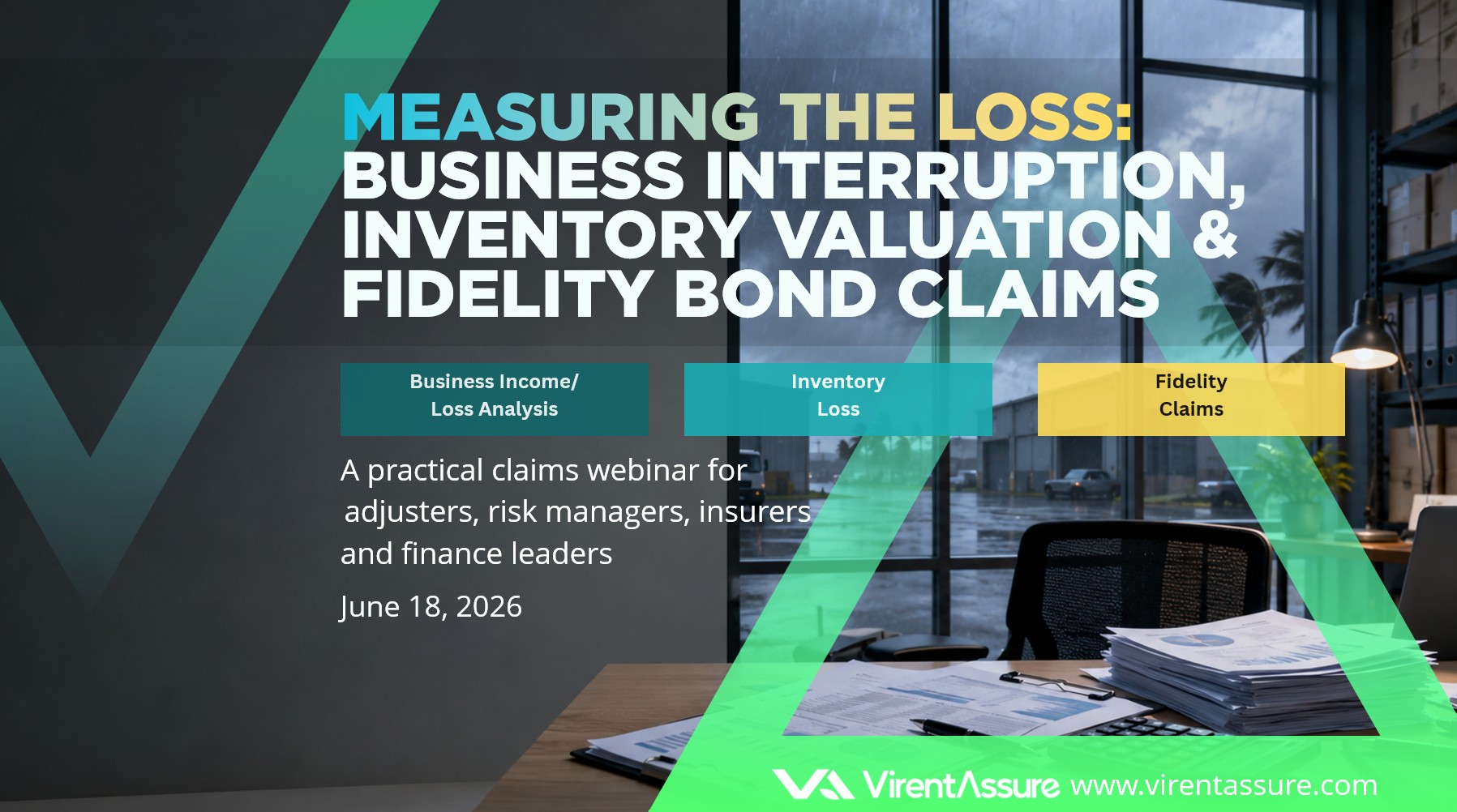
This article explains how VirentAssure helps clients quantify complex losses involving inventory valuation, business interruption, claims valuation, and fidelity bond claims through clear documentation, forensic accounting analysis, and defensible loss calculations.
July 23, 2026
4 views
By Anisa Chowdhury, CPA, CA, Managing Director, VirentAssure
When a business experiences a fire, flood, theft, storm event, employee dishonesty, or operational shutdown, the financial loss is not always obvious. The visible damage may only be part of the claim. Businesses may also face lost income, damaged or missing inventory, extra expenses, and financial losses caused by fraud or misconduct.
For insurers, adjusters, risk managers, finance leaders, and policyholders, these claims require more than estimates. They require a clear, documented, and defensible loss calculation.
At VirentAssure, we help clients quantify complex financial losses involving inventory valuation, business interruption, claims valuation, and fidelity bond claims.
Inventory losses can be difficult when the stock is destroyed, waterlogged, burned, stolen, spoiled, or no longer available for a physical count. In these situations, the loss often has to be reconstructed from financial and business records, including beginning inventory, purchases, sales, cost of goods sold, freight, transportation, and other related costs.
A common reconstruction approach is:
Beginning Inventory + Purchases, Cost of Goods Sold = Ending Inventory
The result should then be tested against margins, turnover, inventory trends, and known business conditions. This helps determine whether the claimed amount is reasonable and supportable.
One of the most common valuation issues is whether inventory should be valued at replacement cost, cost basis, or selling price.
Replacement cost considers what it would cost to replace the lost inventory today. Selling price may apply to finished goods, but it must be adjusted for costs not incurred, such as discounts, commissions, packaging, and shipping.
This distinction matters because inventory claims can overlap with business interruption claims. If lost goods are valued at selling price, the profit margin on those same goods should not also be included in a lost profits claim.
Strong documentation is critical to claim resolution. Key records may include:
Insurance policy and endorsements
Financial statements and tax returns
Inventory reports and inventory subledgers
Vendor invoices and purchase records
Bank records, checks, and payment support
Sales records, deposits, and shipping logs
Freight, transportation, and stocking cost support
Photos, inspection reports, disposal records, and salvage documentation
The documentation request should be tailored to the business, industry, accounting system, and nature of the loss.
Business interruption insurance is generally intended to place the policyholder in the financial position it would have occupied had the interruption not occurred, not in a better position.
A loss calculation typically includes projected business income, actual results, saved expenses, extra expenses, the period of restoration, and policy limits. Common challenges include overstated revenue assumptions, incomplete records, unclear policy wording, and disputes over the proper restoration period.
Forensic accounting helps connect the financial analysis to the facts, records, and claim timeline.
Fidelity, crime, and financial institution bond claims often involve losses from employee dishonesty, theft, embezzlement, forgery, check fraud, vendor fraud, business email compromise, or other financial misconduct.
These claims require careful review of bank records, accounting systems, approvals, user access logs, employee records, and vendor records. The objective is to quantify the financial loss and document the evidence trail clearly.
VirentAssure supports clients with:
Inventory valuation and loss calculations
Out-of-sight inventory reconstruction
Business interruption and income loss analysis
Fidelity bond and employee dishonesty claims
Fraud and forensic accounting support
Claims documentation and proof of loss support
Independent claims valuation review
Complex claims need a practical, evidence-based approach. A well-supported calculation can reduce disputes, improve claim outcomes, and help all parties understand the true financial impact of the loss.
If your organization needs support with inventory valuation, claims valuation, business interruption, or fidelity bond claims, VirentAssure can help.
Contact: info@virentassure.com
Website: www.virentassure.com